
The closely watched U.S. Senate race in Georgia has been called.Democrat Sen. Jon Ossoff is projected to win re-election in Georgia over Republican Rep. Mike Collins.Collins was attempting to flip a Democratic seat while Republicans defend their existing Senate majority against challenges elsewhere.Republicans currently control 53 Senate seats, compared with 47 held by Democrats and independents aligned with them.Democrats need a net gain of 4 seats to take control, increasing the importance of every competitive contest.Republicans are heading into Election Day with formidable national fundraising operations and a major Trump-aligned political spending network backing them.Federal filings show the Republican National Committee raised approximately $341.5 million during the current cycle through October 14.The RNC reported approximately $76.2 million remaining in cash, even after extensive transfers, operations, and campaign expenditures.Its financial position provides resources for voter contact, organizing, advertising, and assistance to Republican campaigns across competitive states.The National Republican Congressional Committee entered October with approximately $61.3 million available, according to reported September figures.House Republicans also raised approximately $50 million during the third quarter, strengthening their ability to defend vulnerable seats.Those resources matter because television advertising, field operations, and last-minute voter mobilization can become expensive in competitive districts.Associated Press reporting says Trump-aligned groups spent nearly $277 million since early September supporting Republican candidates nationwide.MAGA Inc., the president’s flagship super PAC, transferred $200 million to No Going Back PAC for campaign activity.It also transferred $25 million to Safety and Affordability PAC, helping finance additional Republican messaging and advertising.
Blog
-

31 BEFORE & AFTER TRANSFORMATION PICS OF WOMEN WHO GAINED WEIGHT
For years, society taught women to shrink themselves — smaller bodies, smaller meals, smaller lives. But something unexpected started happening online: women began sharing their weight-gain transformations, and the world couldn’t look away. Not because they got bigger… but because they finally looked alive.
The movement began quietly. A few brave women posted side-by-side photos: one from the years they starved themselves to fit in, and one from the moment they finally chose strength over fear. The contrast was shocking — not in size, but in energy. Their eyes looked brighter. Their faces looked healthier. Their confidence was impossible to ignore.
At first, people didn’t understand. “Why celebrate weight gain?” critics asked. But the comments underneath told the truth:
“I finally feel like myself.”
“This is the happiest I’ve ever been.”
“I didn’t gain weight — I gained my life back.”Doctors soon joined the conversation, and what they revealed changed everything. One by one, medical professionals, therapists, and nutritionists began explaining what many women had lived through in silence for years: that weight gain is not always a failure. Often, it is a sign of healing. A sign that the body is finally recovering from prolonged stress, hormonal imbalance, under-eating, emotional exhaustion, depression, anxiety, and chronic fatigue. A sign that survival mode is ending.
For countless women, the image labeled “before” was never healthy. It wasn’t thin — it was fragile. It was a body running on adrenaline and restriction. A body surviving on too little sleep, too little nourishment, and far too much pressure. A body praised by society, yet quietly breaking down from the inside.
And the “after” photo? It wasn’t bigger. It was stronger. It was warmer. It was alive.
These transformations had nothing to do with numbers on a scale. They weren’t about chasing a smaller size or fitting into an outdated standard. They were about women reclaiming themselves. Reclaiming their identity after years of shrinking — physically, emotionally, socially. Reclaiming pleasure without guilt. Reclaiming food not as an enemy, but as fuel, comfort, culture, and joy. Reclaiming rest without shame. Reclaiming their glow — the kind that doesn’t come from discipline, but from balance.
Many of these women spoke openly about what they had lost before they healed: their menstrual cycles, their energy, their focus, their libido, their sense of self. They talked about waking up exhausted, about feeling cold all the time, about hair thinning, moods crashing, and joy fading. And they talked about how gaining weight wasn’t the problem — it was the solution their bodies had been begging for.
The most powerful part of these transformations wasn’t physical at all. It was the confidence that returned once fear loosened its grip. The genuine smiles that reached the eyes. The softness that came with safety. The strength that followed nourishment. The curves that appeared not from unhealthy habits, but from finally listening to the body instead of fighting it.
There was something unmistakable in their presence: peace.
Slowly, something shifted online. Comment sections changed. Conversations evolved. Instead of “How do I lose weight as fast as possible?” people began asking, “How do I feel like her?”
How do I feel grounded?
How do I feel energized?
How do I feel comfortable in my own skin?
How do I stop hating my body and start trusting it?The focus moved away from punishment and toward care. Away from shrinking and toward thriving.
These women didn’t just transform their bodies — they transformed the conversation. They challenged the idea that beauty is fragile, that health is visible only through thinness, that discipline must hurt to be valid. They showed that healing can look fuller. That confidence can look softer. That strength doesn’t always look sharp or rigid — sometimes it looks nourished, calm, and deeply rooted.
Their message, spoken without shouting, landed powerfully:
You don’t need to be smaller to be beautiful.
You don’t need to disappear to be worthy.
You don’t need to fight your body to love yourself.You just need to be yourself — fully, loudly, unapologetically.
Fed. Rested. Whole. -

United States: a world figure in music loses his life in a plane crash..
known as The Big Bopper. For Americans, and music lovers worldwide, this tragedy became immortalized as “The Day the Music Died.” Buddy Holly, in particular, stood as a world figure whose innovative sound, songwriting genius, and youthful energy helped define rock ‘n’ roll’s golden age. His death at just 22 cut short a career already reshaping popular music and left an indelible mark on cultural history.
-

Sentenced to 452 Years in Prison
A courtroom decision that resulted in a 452-year sentence for a teenager has sparked widespread debate across the country, raising difficult questions about justice, responsibility, and how young offenders should be treated by the legal system. The case attracted significant public attention because of the seriousness of the actions involved and the extraordinary length of the sentence handed down by the court.
-

Triicky Pics That Need a Double Take: Bizarre Photos from Confusing Perspectives

So buckle up, because your brain is about to take a trip into the weird and wonderful world of photographic illusions.
-

President Trump Accepts a Resignation After a Sudden Departure
A Facebook reel claims that a senior figure has resigned and that President Donald Trump accepted the departure. The caption promises more detail but does not name the person, office, effective date, or reason for leaving. Resignations inside an administration can follow policy disagreements, personal decisions, investigations, election plans, or routine staff turnover. The meaning depends on the role. A cabinet secretary, military official, adviser, and agency employee each leave through different legal and administrative processes. A verifiable resignation should appear in a written statement from the official, the White House, or the relevant department. The announcement would normally identify
A profound and deeply devastating tragedy has gripped the global community as breaking news confirms that a massive commercial passenger aircraft carrying more than 244 innocent people has violently crashed. First responders, local police units, and specialized emergency medical services are currently rushing to the impact zone in massive numbers, with regional authorities officially verifying the catastrophic event just moments ago. Stunned eyewitnesses located near the crash site described a truly horrifying and apocalyptic scene, recounting how immense plumes of thick, toxic black smoke and intense, roaring orange flames instantly billowed high into the afternoon sky, leaving nearby onlookers and local residents in a state of absolute shock, paralysis, and utter disbelief.
-

Insane Photos That Will Totally Mess With Your Mind — You Won’t Believe What You’re Seeing
Whether you love a good visual riddle or just enjoy being playfully confused, this gallery is a goldmine of “how is that even possible?” moments.
So buckle up, because your brain is about to take a trip into the weird and wonderful world of photographic illusions.
-

A Neighbor’s Dog Turned a Frightening Moment Into an Unforgettable Lesson
- An ordinary afternoon in a quiet neighborhood took an unexpected turn when two young children were playing in their backyard while a nearby dog suddenly entered the property. The animal’s quick movements toward the children caused immediate concern, prompting their parent to rush outside and bring them to safety. At first glance, the situation appeared alarming, and emergency responders were contacted to ensure everyone involved was protected. However, as the scene unfolded, several unusual details suggested there might be more to the story than initially believed.
-

A Devastating Commercial Aviation Disaster Leaves More Than 244 Passengers Feared Dead As Rescue Crews Battle Flame And Time
A profound and deeply devastating tragedy has gripped the global community as breaking news confirms that a massive commercial passenger aircraft carrying more than 244 innocent people has violently crashed. First responders, local police units, and specialized emergency medical services are currently rushing to the impact zone in massive numbers, with regional authorities officially verifying the catastrophic event just moments ago. Stunned eyewitnesses located near the crash site described a truly horrifying and apocalyptic scene, recounting how immense plumes of thick, toxic black smoke and intense, roaring orange flames instantly billowed high into the afternoon sky, leaving nearby onlookers and local residents in a state of absolute shock, paralysis, and utter disbelief.
-
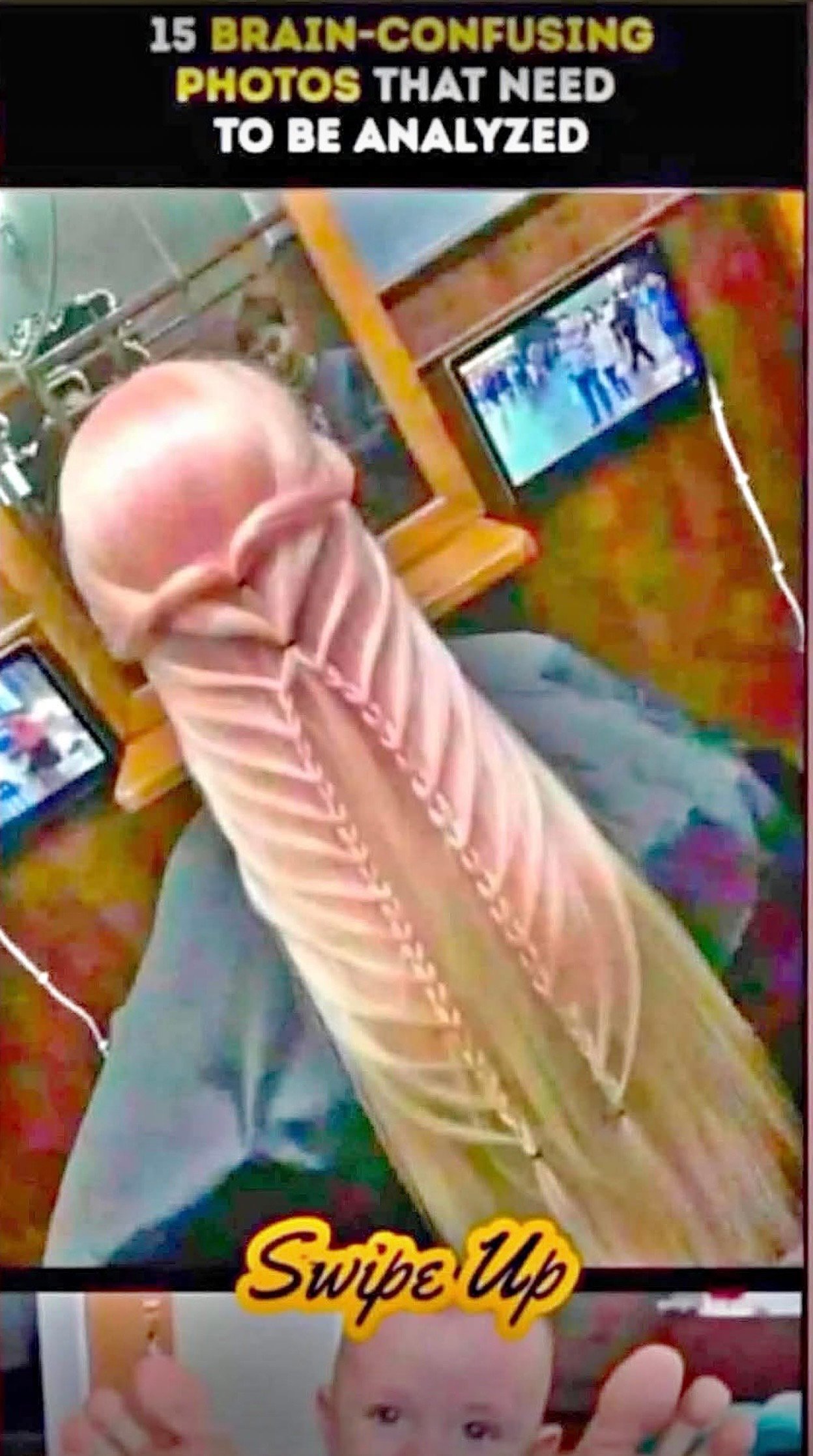
ST14. Triicky Pics That Need a Double Take: Bizarre Photos from Confusing Perspectives
The image above belongs to a fascinating category known as brain-confusing or perception-challenging photographs. At first glance, it may appear unfamiliar, abstract, or even puzzling. Viewers often struggle to immediately identify what they are seeing. This confusion is not a flaw in intelligence or attention—it is a natural consequence of how human perception works.
This article explores why images like this cause confusion, how symmetry and perspective influence interpretation, and why such visuals continue to captivate audiences across social media and psychology studies alike.
One of the strongest elements present in this image is symmetry. Symmetry occurs when one part of an image mirrors another, creating balance and repetition. While symmetry is often associated with beauty and order, it can also confuse the brain when applied in unexpected ways.
Human perception relies heavily on familiar patterns—faces, bodies, landscapes, and everyday objects. When symmetry disrupts these patterns, the brain may attempt to “fill in the blanks” incorrectly. Instead of recognizing the original subject, the viewer may see something entirely different.
In symmetrical images:
- Depth can appear flattened
- Orientation becomes ambiguous
- Familiar shapes merge into unfamiliar forms
This phenomenon explains why some viewers report seeing multiple interpretations of the same image depending on how long they look at it.
Why the Brain Searches for Meaning
The brain is wired for interpretation, not passive observation. From an evolutionary perspective, quickly identifying faces, movement, or potential threats helped humans survive. As a result, the brain constantly searches for meaning—even when none is clearly defined.
In ambiguous images:
- The brain guesses instead of confirms
- Context is invented when missing
- Perspective errors occur
This image offers minimal environmental cues. There is no background scenery, no clear orientation markers, and no familiar reference point. Without these anchors, the brain struggles to assign a single, stable interpretation.
The Role of Cropping and Framing
Another reason this photo challenges perception is tight framing. When an image is cropped closely, it removes contextual information that helps the brain understand scale, position, and orientation.
For example:
- Is the image upright or rotated?
- Is the subject close or far away?
- What part of a larger scene is being shown?
Without answers to these questions, perception becomes guesswork. The brain may reinterpret textures as shapes or shadows as outlines, creating illusions that were never intended by the original scene.
Mirror Effects and Visual Duplication
Mirror effects are commonly used in digital media to create surreal or eye-catching visuals. By duplicating and flipping part of an image, designers can produce scenes that look simultaneously realistic and impossible.
Mirror effects can:
- Create false depth
- Merge separate elements into one
- Trick the brain into seeing new forms
In this case, the mirrored composition causes the central area to appear unfamiliar. The repetition draws attention to the middle, encouraging the brain to search for meaning there—even if none exists beyond abstract form.
Why These Images Go Viral Online
Images like this often circulate widely on social media under titles such as “brain-confusing photos” or “images you have to look at twice.” Their popularity is no accident.
They succeed because they:
- Trigger curiosity
- Encourage prolonged viewing
- Invite discussion and interpretation
People enjoy sharing content that makes others pause and think. The moment of confusion followed by realization—or continued uncertainty—creates engagement, comments, and debate.
The Psychology of Ambiguous Images
Psychologists have long studied ambiguous images to understand perception. Famous examples include optical illusions that can be seen in two ways or images that shift interpretation over time.
Ambiguous visuals reveal that:
- Perception is subjective
- Context shapes interpretation
- Different viewers see different things
This image functions in a similar way. Some viewers may perceive abstract shapes, others may see mirrored forms, and some may struggle to categorize it at all. None of these responses are incorrect—they simply reflect individual perception.
Attention, Focus, and Viewing Time
The longer a viewer looks at an ambiguous image, the more interpretations may emerge. Short glances often result in confusion, while extended viewing can lead to partial understanding—or even more uncertainty.
Factors that influence perception include:
- Screen size
- Viewing angle
- Lighting conditions
- Viewer expectations
This is why such images are often paired with prompts like “Look again” or “Swipe up.” They invite interaction and deeper attention.
Digital Editing and Modern Illusions
With modern editing tools, creators can easily manipulate images to challenge perception. Cropping, mirroring, contrast adjustments, and color balancing all influence how an image is read.
Importantly, not all confusing images are digitally altered. Many are natural photographs taken from unusual angles or under uncommon conditions. The brain assumes typical viewpoints, so when those assumptions are broken, confusion follows.
Why the Brain Dislikes Uncertainty
Humans naturally seek clarity. When an image resists easy interpretation, it creates mild cognitive tension. The brain wants resolution—an “aha” moment where everything clicks.
This tension explains why viewers:
- Zoom in
- Rotate screens
- Ask others what they see
The discomfort of not knowing becomes a motivating force, encouraging deeper engagement.
The Educational Value of Visual Illusions
Beyond entertainment, images like this serve an educational purpose. They help demonstrate how perception works and how easily it can be influenced.
In educational settings, such images are used to teach:
- Cognitive bias
- Visual processing
- Human perception limits
They remind us that seeing is not the same as understanding.
Art, Interpretation, and Subjectivity
From an artistic perspective, ambiguous images challenge traditional ideas of representation. Instead of delivering a clear message, they invite interpretation.
Art does not always aim to explain—it often aims to provoke thought. In this sense, images like this succeed by encouraging viewers to question their assumptions.
Why There Is No “Wrong” Interpretation
One of the most important lessons from perception-challenging images is that there is no single correct way to see them. Each viewer brings their own experiences, expectations, and visual habits to the image.
Images that confuse the brain are powerful reminders that perception is not objective. What we see is shaped by biology, experience, and context. When those elements are disrupted, the brain struggles—and in that struggle, we learn more about ourselves.
This image is not meant to deceive or shock. Instead, it invites curiosity, patience, and reflection. It shows that sometimes, the most interesting visuals are not the ones we understand immediately, but the ones that make us stop, look again, and question what we think we know.
In a world flooded with instantly recognizable content, images that resist quick interpretation offer something rare: a moment of thoughtful pause.